Monday, November 4, 2013

Political Monsters and Our Inner Demons


John Buell is a columnist for The Progressive Populist and a faculty adjunct at Cochise College. His most recent book is Politics, Religion, and Culture in an Anxious Age. 

The recent crisis over the federal government shutdown and impending default on the US government’s debt obligations provides some unexpected lessons. They have inadvertently taught us that economic self-interest, at least as usually defined, does not explain everything. An unlikely coalition of zealots produced some surprising events and even the most powerful directors cannot always control the script.


Much conventional discourse assumes that economic actors, especially big business executives, are trying to maximize their compensation packages. Yet as Paul Krugman pointed out in a recent blog post, the push for austerity in recent years has not only been bad for working class Americans, it has also depressed GDP and corporate profits. But what is bad for business and even for most midlevel executives has been good for the top .1 percent. Krugman adds “when you make as much money as the 0.1 percent does, it’s no longer about what you can buy — it’s about prestige, about receiving deference, about what Tom Wolfe… called 'seeing ‘em jump.'" As long as CEOs receive the largest share of the pie it does not matter if the pie isn’t growing very fast. Krugman adds that there is more deference to the wealthy under Republicans and that tycoons don’t “suffer the agony of having to deal with people they can’t fire.”

Jamie Dimon, CEO, Goldman Sachs
Even tycoons, however, don’t always get what they want. It is one thing to close down the federal government in the interest of forcing ever deeper cuts in popular domestic programs like Social Security and Medicare and more deference to elites. It is quite another to threaten default in the bond market. One of the great ironies of the recent crisis is that the Tea Party groups, funded and encouraged by the Koch brothers and by such political operatives as Karl Rove, took the bond market to the brink of default. Disrupting that market might well, as Doug Henwood points out, have not only economic but political consequences as well. This market is an instrument of ruling class power as big investors through their purchases and sales can push interest rates on municipal bonds up or down, thereby signaling their approval or disapproval of government policies. Once that market no longer serves as a safe haven and the US dollar is no longer the world’s reserve currency, ordinary working class Americans might all be better off. Nonetheless such a scenario is far from certain and the turmoil in the interim might entail dire economic and political consequences for elites as well.  In any case the loss of the bond market as a disciplinary tool is surely something economic elites would strive mightily to avoid.

The two Kochs
The Tea Party and the Kochs are not the only partially discordant and not fully predictable coalitions that have shaped our politics. Big business and the religious right have been a mighty force in US politics, and the latter has played an important supporting role in this drama although it has received less attention.


Though many on the left are accustomed to thinking of the religious right and big business as kissing cousins, these two groups have partially discrepant doctrines and policy proposals. A generation ago hardly anyone would have predicted they would form an alliance of any sort. Yet how have they managed not only to collaborate but also even to increase their influence? If identity plays such a key role, it is also multifaceted and a bit slippery around the edges. William Connolly, author of Capitalism and Christianity, American Style, argues that identity is expressed not only in formal doctrines but also in underlying sensibility or gut sense about the world:
"One possibility is that amidst the creedal linkages and differences the parties also share a spiritual disposition to existence. Their ruthlessness, ideological extremism, readiness to defend a market ideology in the face of significant evidence, and compulsion to create or condone scandals against any party who opposes their vision of the world, express a fundamental disposition toward being in the world….The element of identity most significant to this movement… is the insistence by its members that they are being persecuted unless they are thoroughly in power, and the compensatory sense of special entitlement that accompanies the rise to power of a constituency that so construes itself."
This spiritual disposition in turn is nourished by and intensifies deeper existential anxiety, in particular resentment of the "obdurate fact of mortality and a world in which one cannot will the past again." There are no mulligans in life. Such fears and anxieties are seldom expressed directly and not always consciously acknowledged. To do so would undermine the tactical and psychological efficacy of the compensatory moves. Nonetheless the anxieties are not without effect. They are expressed in moods, facial expressions, tone of voice, as well as substantively in demands for black and white standards, demonization of one’s opponent and advocacy of harsh punishment of those who deviate from these standards.


Intensities across lines of partial creedal differences can resonate with each other. The positive feedback loops can fashion movements that spiral well beyond the expectations of early supporters or advocates. Thus the problems not only for progressives but also for such luminaries as Karl Rove. Krugman recently pointed out: "[T]he elite has lost control of the Frankenstein-like monster it created. So now we get to witness the hilarious spectacle of Karl Rove in The Wall Street Journal, pleading with Republicans to recognize the reality that Obamacare can’t be defunded. Why hilarious? Because Mr. Rove and his colleagues have spent decades trying to ensure that the Republican base lives in an alternate reality defined by Rush Limbaugh and Fox News. Can we say 'hoist with their own petard?'"


The contention that shared sensibility across lines of partial policy disagreements influences our politics today receives support from Stanley Greenberg’s Democracy Corps report on focus-group meetings with Republicans. Greenberg comments: "The greatest source of hope [of evangelicals] is the Tea Party because they are standing up and pushing back. They may not agree with the Tea Party on some issues, but they share a special solidarity given how isolated they are. When asked about our country’s greatest strengths and what gives them hope, the Tea Party is universally mentioned. They say that people are finally 'standing up' and 'fighting back.'"

sittin' down fightin' back
Ted Cruz
One evangelical woman comments: “Well, I would say, the rise of the Tea Party, that people are getting involved, and they're standing up... People are saying hey, this isn't what's in our Constitution, and it's not what's in our schools. And I think people are taking a stand now, and we need to before it's too late.”

Progressives do need to acknowledge that destructive sensibilities can infect any doctrine or cause. Anger regarding the economic exploitation, investment banker’s fraudulent practices, and planetary despoiling is strong and well justified. Nonetheless, reformers must strive to keep such anger from boiling over into demonization and exclusion of one’s opponent even as one fights for a cause. Such a balancing act is a tough challenge.


Bridges to the Tea Party or the Evangelicals may be difficult now, but there are rays of hope. Greenberg’s study does indicate great concern among many Republicans regarding government spying. In addition some evangelicals are concerned about the future of the planet. Beyond this progressive voices in our churches must counter the image of a vengeful God with that of a Jesus who castigated the rich and evinced care and concern for the poor and oppressed.


Share:
Continue Reading →

Thursday, October 24, 2013

Snowden's Real Crime

Steven Johnston
Neal A. Maxwell Chair in Political Theory, Public Policy, and Public Service, University of Utah

Despite military crisis in Syria and fiscal terrorism in the United States, Edward Snowden continues to haunt American and global politics. He has exposed and unnerved the American national security establishment, its partner in international crime, Great Britain, and disrupted their planetary surveillance networks, which are far more extensive and menacing than previously realized, or even imagined. The NSA (assisted by GCHQ) not only aims to surveil, literally, the entire world with and without its cooperation; it also regulates and shapes the production and circulation of encryption standards and encryption software to facilitate its limitless eavesdropping. Snowden’s actions took officials by such surprise that Director of National Intelligence James Clapper lied to Congress, with impunity, about the scope of NSA skullduggery in an effort to limit the “damage” of Snowden’s revelations. He, of course, has Barack Obama’s full support.

guy kinda looks like mike from breaking bad
At right: James Clapper
Snowden’s status is much in dispute. Most Americans approve of his efforts on behalf of democratic transparency,to inform the American public about what is done in its name, and consider hima whistleblower. The government, unsurprisingly, deems him a criminal, disloyal, a traitor who aids and abets the enemy. The latter charge is especially critical to Obama Administration efforts to criminalize investigative journalism and buttress the inter-national security state. This kind of effort is already paying off, as Glenn Greenwald has documented. Mainstream media mimic the official state line, having been effectively cowed and co-opted over many decades by insider access and standing. NBC’s DavidGregory is perhaps exhibit number one. Jeffrey Toobin could be considered exhibit number two.


Edward Snowden should be thought of as a democratic citizen with the courage of his moral and political convictions. He belongs in the distinguished democratic dissident tradition exemplified by Chelsea Manning and Daniel Ellsberg and their heroic efforts to disclose American perfidy in Iraq and Vietnam. He is paying a terrible price for brave political decisions made for the good of democracy, rendering him a political prisoner (as is Manning).


One of the principal objections to Snowden’s whistle blowing is that he allegedly caused irreparable harm to the United States, endangering national security and placing lives at risk. In the wake of charges against (then) Bradley Manning that included aiding and abetting the enemy, this comes as no surprise. The common phrase heard early on regarding Manning was that he has much blood on his hands. Officials later retreated from such claims, but the work they do in slandering whistle blowers and whistle blowing remains.


Invoking the specter of death has long been the default response of the state to exposés of its secrets. During the Cold War instances of Soviet espionage involving American agents (Aldrich Ames, Robert Hanssen, etc.) were followed by extravagant claims of unprecedented damage inflicted against the country’s national security interests, which, it was always said, would take a great deal of time to unravel and catalogue. Ironically, they were so enormous that they defied any specificity. People were simply supposed to believe government assessments without any evidentiary showing. There never were any such showings, of course, and the claims could not be taken seriously, though they would be made over and over again. Somehow, the republic never fell despite all the repeated damage cited. Only the Soviet Union collapsed—before the disbelieving eyes of American intelligence professionals.


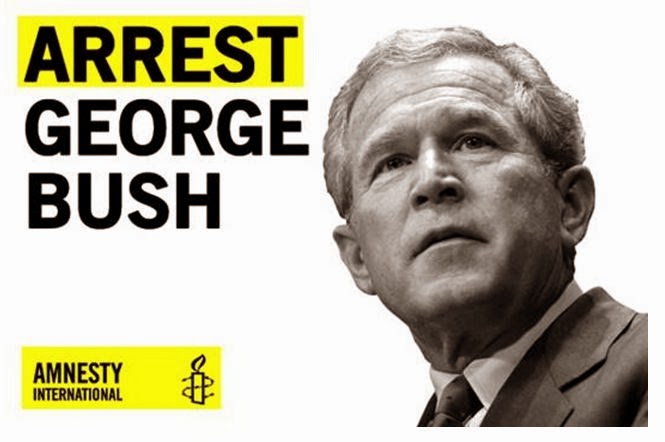
What’s more, if American national security, aiding and abetting the enemy, or responsibility for lives gratuitously lost were really of concern in Snowden’s case, (now former) President George Bush would have been tried and convicted long ago for invading Iraq, which contributed to hatred of the United States across the globe, and gave al Qaeda its greatest recruiting tool and boost. President Barack Obama likewise would find himself in the dock for his global drone campaign that has murdered hundreds of innocent women and children and created untold mortal enemies in the process. These presidents have killed and murdered with impunity and have real blood on their hands, making the United States less safe in the process.

What really matters to the Obama Administration and other governments is Snowden’s audacity—that he would take it upon himself, as a citizen, to force a conversation on not just transparency but also on democracy itself, a conversation that people like Obama say they favor but do nearly everything possible to avoid, postpone, subvert, or derail. Democracies do not value citizens such as Snowden; they fear, police, intimidate, and do whatever it takes to control, contain, domesticate, and discourage them. (Julian Assange remains the target of secret grand jury proceedings in Virginia.) Rather, citizens in democracies must know their place in the political order of things and stick to it. This is why Vladimir Putin initially insisted that Snowden curtail activities “against” the United States before considering asylum. Putin did not want Russians to view Snowden as a model. Think of this as the infantilization of citizenship. It could be seen in the streets of New York City during the 2004 Republican National Convention; it could be seen in the brutal police reaction nationwide to Occupy Wall Street in 2011 and 2012.


Yet few things are as democratic as the people themselves not just defending but taking and exercising their rights as citizens. This may, on occasion, entail problematic consequences. In the United States, at the founding, Americans vandalized the homes of royal tax collectors to defeat enforcement of revenue policies. In the 19th century, a group of Boston citizens refused to let Anthony Burns be forcibly returned to slavery by a United States Marshal, who was killed in the process. Frederick Douglass defended the killing of the marshal, a kidnapper, in the name of self-defense and the right to life. These actions are not automatically condemned because they involve violence and blood. They are considered part and parcel of America’s patriotic tradition. They involve citizens, aware of the potential consequences, taking actions on behalf of a new democratic order yet to come. You can hear the infantilization at work when it is asked, rhetorically of course: Who is Edward Snowden to take such action on his own? The answer is: who does he have to be? He’s a democratic citizen.
Share:
Continue Reading →

Thursday, October 17, 2013

The Racial Innocence of John Roberts

Jack Turner


Jack Turner is associate professor of political science at the University of Washington. He is the author of Awakening to Race: Individualism and Social Consciousness in America (University of Chicago Press, 2012).

Chief Justice Roberts is on a mission to dismantle public policies that correct the aftereffects of de jure white supremacy. Civil rights lawyer William Taylor warned us of Roberts’ softness on white power on the eve of his confirmation: “The most intriguing question about John Roberts is what led him as a young person whose success in life was virtually assured by family wealth and academic achievement to enlist in a political campaign designed to deny opportunities for success to those who lacked his advantages.” Taylor chronicled Roberts’ early career in the Reagan administration where he worked energetically to strip federal courts of the power to desegregate schools through busing; Roberts also worked energetically to block the 1982 re-authorization of the Voting Rights Act and to deny public education to children of undocumented immigrants. During the confirmation battle, Roberts maintained that he was simply following the orders of superiors. But through an analysis of legal memoranda from the period, Taylor demonstrates that Roberts took positions more hostile to the rights of African Americans and Latinos than those of his superiors.


Taylor’s worries about the implications of a Roberts Court for racial justice have been vindicated. In Parents Involved v. Seattle (2007), Roberts led the Court’s majority in striking down the use of a “racial tiebreaker” in the allocation of spots in oversubscribed public schools. In Ricci v. DeStefano (2009), he joined the majority in upholding the validity of a civil service exam that had a demonstrable racial bias in favor of whites. In Shelby County v. Holder (2013), he led the Court in striking down Section 4 of the Voting Rights Act (VRA), rendering the Justice Department powerless to prevent states and localities with a history of racial discrimination from infringing citizens’ right to vote. What interests me is not just the pattern of Roberts’ race jurisprudence. It points clearly in the direction of a colorblind constitutionalism that protects white advantage. What most interests me is Roberts’ self-assured style of opposing race consciousness. That style bespeaks both a racial innocence born of privilege and an investment in an American “meritocracy” that just so happens to tilt in favor of whites. By analyzing this self-assured style, we get a window into the mindset of those who work to preserve racial stratification while congratulating themselves on rigorous adherence to the principles of liberal democracy.


“The way to stop discrimination on the basis of race is to stop discriminating on the basis of race,” Roberts propounded in Parents Involved. Though the formulation is forceful, the logic is old. Since the 1960s, conservatives have framed race-conscious remedies for racial injustice as morally equivalent to racial slavery and segregation. The logic turns on the idea that racial discrimination—in the weak sense of distinguishing racial groups—is morally repugnant in its own right and the first step down the slippery slope of racial oppression. The logic is appealing because it exploits a partial truth: reflexive racial categorization of people is a crude and often degrading form of social interpretation, and all systems of racial oppression require drawing distinctions among racial groups. Proponents of colorblindness thus portray themselves as heroic defenders of racial justice who tough-mindedly attack racism at its root. The logic’s weakness lies in its obfuscation of the fact that we live in historical time, and that centuries-old systems of oppression leave aftereffects even after those systems have been formally abolished. Refusing to take notice of race becomes a principled basis for refusing to track how the legacies of slavery and Jim Crow differentially affect the lives of citizens, conferring advantage on some and disadvantage on others.


This blindness to historically cumulative racial power could be an innocent intellectual mistake and therefore susceptible to correction. Or it could be the whole point: colorblindness leaves the material inequalities produced by slavery and Jim Crow intact, and makes them the presumably just baseline of our political life. The fact that African Americans make 60 percent the income of white Americans and possess just 10 percent of the wealth becomes an unfortunate phenomenon whose origins are mysterious—whose causes may even be “cultural”—instead of a predictable byproduct of longstanding failures to provide equal education to black citizens, to prevent discrimination in the workplace, and to ensure equal opportunities to own homes and accumulate wealth. (If Roberts is not convinced that these conditions are traceable to Jim Crow, he should do his homework—starting with Melvin Oliver and Thomas Shapiro’s Black Wealth / White Wealth: A New Perspective on Racial Inequality [rev. ed. 2006]).


Source: Edward N. Wolff, "Recent Trends in Household Wealth in the United States: Rising Debt and the Middle-Class Squeeze—an Update to 2007," Levy Economics Institute of Bard College Working Paper No. 589, March 2010, Tables 10 and 11. - See more at: http://inequality.org/wealth-inequality/#sthash.M9CxHxJm.dpuf
This strategy goes hand in hand with a triumphalist narrative of racial progress that holds that America was born in racial sin but redeemed itself through the Civil War and Civil Rights Movement, culminating in the Civil Rights Act of 1964 and the Voting Rights Act of 1965, which purged the sins decisively (excepting, of course, some final racist holdouts who can be dismissed as atypical). Roberts’ opinion in Shelby County v. Holder expresses this triumphalist narrative: “Our country has changed,” rendering the VRA’s current coverage formula an unjust imposition on states’ “equal sovereignty.” Roberts ignores empirical evidence vindicating the coverage formula. More striking is his failure to acknowledge the force of the VRA’s “bailout provision,” which enables any covered jurisdiction to relieve itself of Justice Department supervision by maintaining a clean record on voting rights for ten straight years, and which therefore addresses his concern about unwarranted federal impositions.


Roberts is exasperated by the fact that the preponderant number of covered states are states of the Old Confederacy; his pique seems directed at the very idea that the racial geography of slavery and Jim Crow is still morally significant. Acknowledging that significance means entertaining the thought that slavery and Jim Crow have afterlives that implicate whites in systems of racial advantage—systems that undermine white claims to merit and self-reliance. Could it be that Roberts’ anxiety over the idea that the racial past is “not even past” is deeply personal—an anxiety rooted in his own investment in his personal narrative of meritocratic success? If he is magnanimous enough to acknowledge that he benefitted from his whiteness somewhere along the way from private boarding school to Harvard College to Harvard Law to Hogan & Hartson to the Supreme Court, must he still cling to the idea that the system is basically just—that even when people like him benefit from whiteness, the magnitude of their merit eclipses all the little ways social systems dole out injustice? If the system is basically just, is not the primary task for the man of clarity and principle to preserve that system, and purge it of so-called correctives that indict both it and its beneficiaries? Must not the man of clarity and principle also insist that the situation of blacks and whites in America is morally symmetrical, notwithstanding any remaining inequalities?


Roberts’ acceptance of the idea that the situation of blacks and whites is morally symmetrical underwrites his hostility to race-conscious public policy. Relinquishing that idea would mean confronting his own placement at the pinnacle of American racial hierarchy. The notion that the playing field—even if occasionally rough and muddy—is basically level, and that the winners on that field have real reason to congratulate themselves, may be the primary source of Roberts’ hostility toward race-conscious public policy. For in attributing injustice to the system, such policy questions the merit of the winners. Losing his identity as a winner is too much for Roberts to tolerate.


Share:
Continue Reading →

Tuesday, September 3, 2013

Living On


Alex Hirsch
University of Alaska, Fairbanks

One popular view in contemporary democratic thinking holds that everything is densely interwoven in a field of public flesh. Everything is crossed and crossing over in a richly enfolded chiasm pulsing with togetherness. The world is seen as an active nexus where singularities merge and respond in mutual transfer. “We participate each other,” writes Norman O. Brown.


There is something highly seductive about this vision. But of course this is only half the story. The constant presence of friction, struggle and conflict – of politics – built into human affairs, belies all this conviviality. The idea that we are always already thrown open to one another misses the point that despite this situation we remain crucially at odds with one another.


This is the point of departure for what some are starting to call the tragic sensibility. To start, the tragic sensibility downplays rationality and especially rationality’s pretension to sovereign mastery over destiny and fate. It also casts doubt on the faith in the sufficiency and autonomy of the self. More specifically, the tragic sensibility names the rivalry between, on the one hand, what our will intends and, on the other, the worldly forces that conspire to thwart those intentions. In this way, it affirms the notion that we are vulnerable to powers not entirely within our control. But there is more. The tragic sensibility offers a searching reflection on the moral conflict generated out of contestations over the meaning of public pain.  


A haunting example of this can be found in Incendies (2010). A kind of Sophoclean tragedy, the film traces the journeys of twin siblings, Jean and Simon Marwan, through an unnamed Middle Eastern country (which we can safely assume is Lebanon) that is mired in a history of religious strife and catastrophic violence. Each sibling is tasked with tracking down an estranged family member (Jean, the twins’ father; Simon, their brother) when Nawal, their mother, posthumously leaves behind two sealed letters to be delivered to each by the twins.


As the twins work respectively to locate their father and brother they begin to unravel the mystery of their mother’s life. Weaving together past and present into an uncanny mosaic, the film gives the supple impression of a world where the consequences of what has happened endlessly open out. 

In a series of flashbacks to the 1970s and ‘80s we learn that as a young woman Nawal was a Christian who fell in love with and was impregnated by a Muslim (Palestinian?) refugee. She eventually gave birth to a son; but, having disgraced her family (once by bearing a child out of wedlock, again by loving a Muslim), the boy is abandoned to a local orphanage while Nawal herself is banished to Daresh, a fictional city on the brink of civil war. 


In Daresh, Nawal enrolls at the local university where she becomes a student activist and editor of a pacifist newspaper. Disgusted with the wanton violence committed by those who espouse the faith to justify hatred, Nawal disavows her Christian past in the name of promoting a peaceful future. 


In one of the film’s most wrenching scenes, we see Nawal riding a bus through a dangerous region of the countryside, frantically searching for her misplaced son amongst orphanages recently razed by Christian guerilla fighters. Along the way the bus is viciously attacked by the Phalangist, who spray a torrent of machine gun fire into its interior before setting the bus ablaze. Nawal, having survived the initial assault along with a handful of others, escapes by baring her cross out the bus doorway. Ironically, the Christian identity Nawal had repudiated saves her life but only at the price of making her the hapless witness and unwitting accomplice to a massacre. 


The tragedy of the scene can be viewed in light of what Bernard Williams writes of tragic situations: there was nothing Nawal could do and yet something had to be done. For Williams, what makes scenes such as this tragic is that Nawal is caught between an impossible choice (reclaim her Christian identity and live, or maintain her righteous contempt and die) and a no less compelling imperative to act (sacrifice her pacifist ideal and act vengefully against the Phalangist in order to prevent such massacres in the future). There is no right thing to do. Whatever Nawal does she is at once right and wrong. There is only the tragic happening and Nawal’s response to what that happening has rendered in her. 


Read in this light, one might say that the tragic sensibility is less interested in coming up with prescriptive standards of action (what should Nawal do?) than in asking questions about how to live on despite the lack of available options (how can Nawal survive such a scene with her moral integrity intact?). As Bonnie Honig puts it, the goal is “to salvage from the wreckage of the situation enough narrative unity for the self to go on.” 
 

There is plenty that can be said about what this modicum of narrative unity might be composed of (a self that is, as Kathleen Stewart puts it, a “fabulation that enfolds the intensities it finds itself in”). But what the tragic sensibility helps to supplement is a sense of what Hayden White means when, in a tragic key, he writes “History is not something that one understands, it is something one endures – if one is lucky.”

This is not to say that with tragedy there is no hope. The tragic sensibility is not tantamount to resignation. Rather, it is about finding ways to live with the intractable quality of conflict endemic to human experience. Not in order to be free of the troubling questions such conflicts evoke. Instead, the tragic sensibility is about grappling with the predicament of yearning for redemption and yet always failing to become redeemed. This is what Paul Gilroy means when he defines tragedy as “suffering made useful but not redemptive.” The tragic sensibility is all about finding ways of being lucky (in White’s sense); not merely to survive, but to live on (an important difference) even when mourning and redemption read like so much messianism. More, it is about marshaling creative forms of aesthetic responsiveness, political judgment, and critical imagination germane to the shared precarity such a condition entails. 

Think of Palestine, where the tragic sensibility of Incendies has taken hold. The goal of reconciling the sectarian conflict between Israeli settlers and Arab aboriginals has long been abandoned by most everyday inhabitants of the West Bank, Gaza, and East Jerusalem. Instead the accent is placed on harnessing ways of living with what has turned out to be irredeemable. 


Neil Hertz talks about this in his recent ethnographic travelogue, Pastoral in Palestine. In 2011, Hertz lived in Ramallah, a Palestinian enclave settled in section A (according to the Oslo Accords of 1993/1995) of the West Bank, while teaching in neighbouring Abu Dis. He writes that of the many people he met, people whose occupied cultures were constantly under threat of erosion and collapse, few expressed any wish for reconciliation; only a desire to invent new modes of being / becoming in the midst of catastrophe. Hertz recalls encounter after encounter with people for whom “There is no solution, only ‘The Situation.’” Salim, a dinner guest, explains this to Hertz one evening: “It will just go on…One must live with it.”


This isn’t pessimism. Nor is it complacency. Indeed, one might say Salim’s position is akin to what Jonathan Lear means by “radical hope.” By this Lear is referring to a hope that is directed toward some future goodness that transcends the current ability to understand what it is: “Radical hope anticipates a good for which those who have the hope as yet lack the appropriate concepts with which to understand it.” A hope that looks forward despite the future’s unpredictability; a hope without guarantees. Only a tragic sense that if we persevere, and act to sustain ourselves, we may get lucky. 

It is important that we recognize all the ways that we are borne out in thick expressions of mutual active witnessing that take shape in everyday rhythms of life. In the flux of a complex world, we really do “participate one another.” But this way of speaking must be complemented by a tragic sensibility sensitive to all the ways that we are connected as well as separated by what is happening and what the happening’s breaking down is doing to us. And we must listen carefully to those like Nawal and Salim who have been quietly inventing modes of staying power, techniques for committing to living on with the tragic sensibility when the deus ex machina of redemption remains an empty promise.  


Share:
Continue Reading →