Thursday, December 12, 2013

Forging Coalitions to Stop the Common Core

Nicholas Tampio
Fordham University
I have children in elementary school. As a parent, I have a front row view of the attempted corporate takeover of America’s schools.
The Common Core State Standards Initiative provides a justification for this takeover. The Common Core is a set of educational standards in mathematics and English Language Arts (ELA). Many people from across the political spectrum endorse the notion of national education standards. This version of the Common Core, however, has been funded and promoted by groups such as the Bill and Melinda Gates Foundation, the Walton Foundation, Exxon, and the US Chamber of Commerce. The Common Core proposes to make students “college and career ready,” but corporate interests define what that readiness means.
If a counter-movement does not act soon, then the Common Core will impose a neoliberal model of education on America’s schools where results, for instance, are measured by standardized test scores. As I have argued elsewhere, the Common Core drains initiative from the classroom and makes school an oppressive place for teachers and students.
Fortunately, I am part of several groups fighting the Common Core. Some allies are on the political left, including Diane Ravitch, who just wrote Reign of Error, a polemic against the educational privatization movement, and Mark Naison, a colleague at Fordham who started the Badass Teachers Association (BAT). Many people recognize that the Common Core’s progressive rhetoric is a Trojan horse for the corporate takeover of schools.
I also work with groups composed largely of self-identified conservatives. For the past year, I have been on the Truth in American Education (TAE) list serve. Many of the members protest the trend whereby corporations and the U.S. Department of Education, rather than teachers and school boards, determine the standards that drive curriculum and assessment.
I oppose the Common Core because I’m watching it harm my children’s school experience. But my personal interests align with my political theoretical ones. I’m a democrat and a pluralist. I agree with philosophers such as James Madison, J.S. Mill, Alexis de Tocqueville, Michel Foucault, Gilles Deleuze, William E. Connolly, and Richard E. Flathman that centralized power facilitates tyranny. Positively stated, I favor political arrangements that distribute power as widely as possible. In the realm of education, I support a variety of educational experiments, including Montessori and Waldorf schools.
In general, I believe in critical thinking, rigor, high education standards, and student and teacher evaluations. Even if I had the power, however, I would not impose one model of education upon the country or define once and for all the key terms in the debate. Intelligent people disagree on how to educate children; it would be foolish to put all of our eggs, so to speak, in one basket.
Proponents of the Common Core sometimes claim that opponents belong to what Paul Krugman calls the “party of stupidity.” That is an unfair description of the coalition forming to stop the Common Core.
To stop the Common Core, citizens need to forge a coalition of people on the political right and the political left. In a pluralistic society, citizens need to make alliances with people we agree with on some issues and disagree on others. 
Here are responses to a few potential objections: 
Aren’t the Common Core just standards? Yes, but that is not the whole story. The Race to the Top program incentivized states to adopt the Common Core and use aligned tests (PARCC or SBAC) to rate students, teachers, and school districts. State Departments of Education mandate that Local Education Agencies (LEA) prepare students for these tests. On paper, schools and teachers have flexibility in how or what they teach; in practice, LEAs throughout the country are making teachers use Common Core-aligned curricula, including scripted lesson plans, or modules. Teachers whose students fail the Common Core exams may be fired; school districts with a certain percentage of failing students may be taken over by the state.
Does local control mean that schools may teach intelligent design in science classes? The Supreme Court case Edwards v. Aguillard (1987) prohibits that. There is a big difference, however, between national bodies enforcing Constitutional limits and laying the foundation for curricula across the country.
Might the problem with the Common Core be the execution? Randi Weingarten, the president of the American Federation of Teachers, for instance, supports the idea of the Common Core and argues that the states are failing it. The problem with this line of defense is that it can be used to justify any idea. My school district in Westchester, New York was thriving before the Common Core and is suffering under it. Some people say that the problem with the Common Core is the high-stakes testing associated with it. Proponents, however, will respond that there needs to be “big data” to determine if students are learning the Common Core. The Common Core is the bait to make people adopt much of the corporate education agenda.
Might the Common Core improve the educational standards for some districts? Maybe. Up to now, however, there is no longitudinal data on what the Common Core accomplishes. There are also stories from around the country (many posted on Diane Ravitch’s blog) that students, teachers, and parents hate the Common Core.
The Common Core is a tree that prevents other educational models from getting sunlight. That is a tragedy, and one easily avoided. The American educational landscape should be a garden with many flowers.

Share:
Continue Reading →

Wednesday, November 27, 2013

Validating Women, Judging Men: The Therapeutic Non-Politics of Sheryl Sandberg’s Lean In


Michaele Ferguson
University of Colorado

Since Sheryl Sandberg’s Lean In was first published, reviewers have criticized her privileged perspective on women’s leadership, her uncritical embrace of capitalism, and her victim-blaming.  Without disagreeing with these critics, I take a different tack and examine the view of feminist politics expressed in her book.  Lean In is symptomatic of a particular moment in American feminism:  one in which the perceived need to validate all women inhibits feminists’ capacity to lead politically.  Many feminists like Sandberg are caught in a therapeutic model of politics, which leads them to water down their controversial claims out of fear that an assertive, feminist call for change might be offensive or hurtful to some women.


Sandberg sees conflict between women as a problem to be overcome; in particular, she is concerned about the “mommy wars” waged between stay-at-home moms and working moms.  She calls instead for a “lasting peace”:
We all want the same thing: to feel comfortable with our choices and to feel validated by those around us.  So let’s start by validating one another.  Mothers who work outside the home should regard mothers who work inside the home as real workers.  And mothers who work inside the home should be equally respectful of those choosing another option. (168)
When women judge one another, they end up feeling bad about themselves.  Sandberg confesses, “Stay-at-home mothers can make me feel guilty and, at times, intimidate me.  There are moments when I feel like they are judging me, and I imagine there are moments when they feel like I am judging them.” (167) These bad feelings undermine political solidarity among women; “guilt and insecurity make us second-guess ourselves and, in turn, resent one another.” (167)  If could we just validate one another’s choices, then we would not have the bad feelings that divide us today.


Behind Sandberg’s call for universal validation of women’s choices is a view of women as natural political allies.  Yet in practice, women fight one another.  Sandberg laments how women criticized Yahoo CEO Marissa Mayer’s decision to continue to work through a very short maternity leave.  She decries Betty Friedan’s refusal to work with Gloria Steinem. (162)  Quoting Madeleine Albright, she warns, “There’s a special place in hell for women who don’t help other women.” (164)  But all this conflict between women is basically unnecessary, or so Sandberg hopes, because women do not radically disagree.  “We should strive to resolve our differences quickly,” she writes optimistically, “and when we disagree, stay focused on our shared goals.  This is not a plea for less debate, but for more constructive debate.” (162)  While Sandberg briefly wonders whether her expectation of female unity derives from sexist assumptions that women are naturally helpful and collaborative (165), she does not seriously explore the notion that women might radically disagree, that sharing an identity might not translate into sharing any particular goals.  


Sandberg’s nonjudgmental feminism is nothing new.  She is expressing a view of feminist politics that is widely accepted in mainstream American feminism:  what I call a therapeutic view of feminist politics.  Dominant approaches to therapy and self-help in recent decades have stressed the importance of validation:  validating oneself improves self-esteem; by contrast, judging oneself harms self-esteem.  This idea has been transposed by feminist writers and activists into the view that feminist politics should eschew judgment and validate all women. Judgment causes divisions among feminists, whereas validation makes it safe for us to come together.  Feminist politics should make us all feel included and feel good about ourselves.  


Yet Sandberg is especially intriguing because she cannot entirely suppress the urge to engage in political judgment.  In particular, she is very comfortable passing judgment on men.  Sandberg encourages readers to openly judge men who do not participate in childcare:
My brother, David, once told me about a colleague who bragged about playing soccer the afternoon that his child was first born.  To David’s credit, instead of nodding and smiling, he spoke up and explained that he didn’t think that was either cool or impressive. This opinion needs to be voiced loudly and repeatedly on soccer fields, in workplaces, and in homes. (112)
She frequently praises men who are stay-at-home dads, and urges us all “to encourage men to lean into their families.” (113)  This could be a simple case of gender equity:  just as she wants to encourage women to lean in at work, she wants to encourage men to lean in at home.  But there is still a double-standard here:  she validates the choice of women to be stay-at-home-moms, but refuses to validate the choice of those same women’s male partners to devote themselves to their careers.

She is, apparently, married to this schlub.

In these moments Sandberg evinces a very different orientation to politics.  She is not restrained by a fear of offending those men whose behavior she judges.  She is not worried about whether they will feel guilt about their behavior, or insecurity about not measuring up to her standards.  In these moments she writes as if feminism is supposed to pass judgment, as if it is supposed to make people uncomfortable by challenging their views, as if it is supposed to persuade us to change our behavior, rather than simply validate each of us as we already are.  She writes knowing that not everyone will agree with her, confident in asserting her views in the face of expected disagreement.  In these moments, Sandberg leans in to feminist politics.


Politics is not therapy, nor should it be made to be.  In politics, we make partial claims on behalf of our points of view.  We will necessarily exclude someone, because our claims do not aim at satisfying everyone.  There are winners and losers in politics.  We aim at passing judgment, at persuading others to change their views, values, and ideologies.  Politics is not about accepting everyone’s life choices as equally valid; it is about pushing for a vision of how one would like things to be.  Moreover, politics is not an activity in which it is appropriate for all participants to feel affirmed by others.  Politics is necessarily uncomfortable and challenging. We make compromises, we work with people we do not agree with or approve of, we lose, and we fail.

What was that about working with people we don't approve of?

Lean In expresses the tension between the therapeutic and the political, between the desire to validate and the need to judge.  The book is supposed to be a call for women to lean in to leadership at work, and yet she undermines this very call by validating women who choose not to do so.  Fearful of offending the women she believes are her natural allies, she waters down her message about leadership by telling us it is okay if we do not want to lean in, that this is an equally valid choice.  The result is a book about leadership that does not lead, a call for women to be assertive that does not assert itself.


While Sandberg analyzes many barriers to women leaning in to leadership, the one she fails to analyze is the one to which she herself succumbs:  the people-pleasing desire to validate all women.  Feminists should reject the therapeutic model of politics, which undermines our capacity to engage forcefully in politics.  Instead, we could take inspiration from the moments when Sandberg’s capacity for political judgment surfaces.  We need to make judgments and take stands with the awareness that we will cause offense, that not everyone will agree with us, that we will have to work at persuading others because we cannot assume natural agreement by virtue of sharing an identity.  The lesson Sandberg gives us is this:  feminists do not need to lean in to leadership at work so much as we need to lean in to politics.   


Share:
Continue Reading →

Tuesday, November 19, 2013

A little respect for the GOP, please

Steven Johnston
Neal A. Maxwell Chair in Political Theory, Public Policy, and Public Service, University of Utah

The contemporary Republican Party, all things considered, may be the most angry, reckless, irresponsible, destructive, fanatical, and know-nothing “mainstream” political organization in the history of the United States. It wages relentless and punitive class warfare against the poor, who are by definition responsible for their condition and seek to live the good life on federal welfare. In its unquenchable hatred of government, it shuts down the national government, threatens the full faith and credit of the country, and inflicts additional damage on an already anemic economy and thus on millions of American lives. A minority entity, it seeks to impose its political will to power on the country through any means available, including the deliberate disenfranchisement of select segments of citizens, especially based on race. It will pursue any and all of its goals based on sheer ideological insistence indifferent to facts, knowledge, history, or scientific evidence. That said, the GOP is a passionate political party that takes its vocation seriously.


In October, Republicans manufactured a set of crises (fiscal, governmental, and economic) by refusing to negotiate a budget. In short, it held the country hostage in the pursuit of narrow political goals, more specifically the defunding of the Affordable Care Act. This time around Barack Obama and the Democrats refused to submit to GOP threats and the party finally abandoned its quixotic goal. In the wake of the recent government shutdown, the GOP’s ratings in national polls plummeted to new lows (no small achievement). Prominent officials (John McCain, Lindsay Graham, etc.) within the party were critical of Ted Cruz and the other hostage-takers for pursuing a doomed strategy. Still, as many observers have noted, Republicans continue to frame basic economic debates. They set the terms on sequestration, taxation, spending, entitlements, and social investment. There is no reason to believe Democrats will do anything other than compromise core ideals in their desire to reach a deal (any deal) to prevent a replay of October’s disaster.


As October deadlines approached and Republican desperation increased, the GOP tried to force Obama’s hand by criticizing him for refusing to negotiate. You’ll negotiate with Iran, but not with us, they moaned. Republicans did their best to shift responsibility for the shutdown and crisis onto Obama, but he wouldn’t take the bait. In fact, Obama made a point of saying he was not going to reward Republicans for doing their jobs. He later advised them to win an election if they want to see their goals realized. The country, by and large, agreed. Should it have? Maybe instead of giving advice Obama should have taken a lesson from Republicans.


It’s true that the GOP is a minority party and cannot achieve its political goals through the usual institutional means (elections, legislation, etc.). This does not mean, however, that other tactics are not available. The party recognized decades ago, for example, that it needed to seize control of the Federal judiciary, especially the Supreme Court, to work its will absent electoral success. The self-denying activism of John Roberts and crew is proof positive of its (most recent) success on this front. Dissatisfied of late with occasional victories, it tried a new set of tactics. Why not shut down government and jeopardize the good credit of the United States? Democrats are likely to blink and we can repeal the signature program of a hated rival who does not belong in the White House. If we do not succeed, we can still damage the very idea of government: call it win-win. The point here is that Republicans, especially after the debacle of the 2012 national elections, possessed few options for political advancement. Thus they turned to creative institutional measures. Democrats were right to block and denounce them, but the GOP was politically correct in its maneuvering. It might well have worked, after all. And Republicans had good reason to think it would work since another version of it had worked once before, thanks to Obama’s pusillanimity, leading to sequestration. This is what politics is all about and Republicans were willing to pursue it through whatever means available. Unlike Democrats, Republicans understand that they have enemies who must be defeated. If this cannot be achieved at the ballot box, there are other options available which might prove equally effective. Whether they will or not cannot be known in advance and Republicans were more than happy to experiment. For this they should be applauded; it expresses a love of politics, which is a risky undertaking and Republicans are willing to put their good names and party fortunes on the line for what they believe are noble and worthy goals.


During the crisis, they did not hesitate to insist that they were in the right. If they could convince the country of this assessment and force the Democrats to retreat, it would have been a remarkable political coup, one which would have reinvented American politics—not necessarily for the better, of course, but this judgment depends on perspective, which is part of what’s at stake in a political contest. Republicans have deployed similar tactics in the Senate to obstruct and derail Democratic initiatives for years, leading to a kind of de facto minority rule in the upper chamber. This success has come in the face of Democratic submission; Republicans may be attacked for their political vision, but Democrats are to blame for allowing Republican takeover of that body on a regular basis thanks to creative use of the filibuster. Republicans know how to practice politics; do Democrats? Republicans have identified the enemy and know how to treat it; do Democrats? Republicans are willing to stand on principle and be judged for the risks they take on its behalf; are Democrats? Republicans may be widely hated and rightly so; Democrats are widely disrespected and rightly so. Politically speaking, which is more problematic? Hate seems part and parcel of politics, to be expected, even welcomed as a matter of course; disrespect seems gratuitously self-inflicted and a sign of weakness, even cowardice. Republicans use the democratic process to produce decidedly undemocratic results, but in doing so they show greater regard for politics, even democracy than do Democrats.


Share:
Continue Reading →

Monday, November 11, 2013

Obama’s Catastrophic Drones

Thomas Dumm
Amherst College

Recent revelations concerning the American drone campaign in Southwest Asia and the Arabian peninsula might lead one to think that the worst aspect of the campaign is the imprecision of the drone attacks, the ancillary damage in the form of innocent lives lost. But leaving aside the horror of a policy of assassination from the sky, this use of drones illuminates a core paradox in the “war against terror.”  


Terrorism, catastrophe, these are big words to throw around. Perhaps it makes sense to begin with a provisional definition of terrorism. I would suggest that we understand terrorism to be the tactical use of violence or the threat of violence in order cause psychological trauma on a specifically targeted population. The purpose of terrorism can vary almost infinitely, from forcing a state to meet a particular political demand, to gaining vengeance against a religious opponent, to – although this is actually more the stuff of graphic novels and superhero movies than reality – expressing a nihilistic urge to destroy for its own sake. Because there is usually a focused end to acts of terror, formal rationality can be used to understand acts of terror. Indeed, one can apply game theoretical models to the efficacy of terrorism, as has been shown by the prominent economist Darius Lakdawalla. 


The effectiveness of terrorism is to be measured not only by the specific destruction those who engage in it wreak – the physical injuries and deaths to those immediately victimized – but more fundamentally instead by how it traumatizes its targeted audience. Terror in this sense is communicative violence, designed specifically to frighten people so as to get them to alter their behavior in ways the terrorist wants. Measuring the efficacy of terrorism then becomes something qualitative – it requires that we be able to describe and interpret the effects of the act or acts of terror on people’s behavior. It requires that we think imaginatively concerning how terrorism does what it does to those who are its victims. 


Sometimes the motives of terrorists can be discerned by knowing who they are. In at least one case, that is easy, because of the extraordinary visibility of the terrorist in question.  I am referring here to the state terrorist, the actor that only pretends not to use the technique of terror in the flimsiest gesture toward human rights. The state terrorist is so prevalent an actor largely because the very function of the state, to paraphrase Max Weber, is to maintain a monopoly on the legitimate use of violence. State actors very often go too far and engage in illegitimate acts of violence, rationalizing their actions as necessary for the survival of the polity they putatively serve. Because they have the tools of violence ready at hand, it is easy for them to act. Because of the vast instruments of destruction that powerful states have on hand, we can state very simply: States terrorize and the more powerful the state the more terrorizing. 


The United States of America is the most prominent practitioner of state terrorism today. One need only read the headline on the front page of the October 22, 2013 issue of the New York Times [PDF] – “Civilian Deaths in Drone Strikes Cited in Report: U.N. Set to Debate Issue: U.S. Sees Triumph, but Pakistanis Say They Live in Terror.” Or read the first quotation in that article, from a denizen of the border town in Pakistan that has been the object much drone activity: “The drones are like the angels of death,” said Nazeer Gul, a shopkeeper in Miran Shah. “Only they know when and where they will strike.” 


This article appeared only a few days after the historian Nasser Hussain published “The Sound of Terror: Phenomenology of a Drone Strike,” on the Boston Review website. Hussain notes the division of experience of drone operators – sight, not sound – and those who live under the threat of drones – sound, not sight. To hear the constant buzzing of a drone overhead day after day, which may only be surveilling an area, but may be preparing to drop a bomb on a target, is obviously terrifying for those who suffer it. Hussain writes, “[O]ne man described the reaction to the sound of the drones as a ‘wave of terror’ coming over the community.” In another testimony, Hisham Abrar stated, “when children hear the drones, they get really scared, and they can hear them all the time.” 


Hussain refers to this as “anticipatory trauma.” Such trauma is deeply associated with the development and intensifying deployment of air power in the twentieth century, noted some time ago by the French war and media theorist Paul Virilio. Think of  the V-1 and V-2 bombs used by the Nazis to terrorize London. “A screaming comes across the sky. It has happened before, but there is nothing to compare it to now,” is how Thomas Pynchon described this in the opening lines of Gravity’s Rainbow.  


But anticipatory trauma is not limited to air power. Think of another twentieth century development, death camps, powerfully analogized by Art Spiegelman in his epic, Maus, when Art asks his psychotherapist, a survivor, what Auschwitz felt like. “What Auschwitz felt like. . . hmmm, BOO! “ “YII!” screams Art, in response. “It felt a little like that,” says the therapist, “but ALWAYS! From the moment you got to the gate until the very end.”

Hussain’s final point in this essay is perhaps his most important, namely, that far from being an efficient means of fighting against terrorists, the infrastructure for drone warfare is vast, extremely costly, and requires a permanent imperial presence throughout the world to work at all.  Aside from the political economic implications concerning the costs of empire, we might also infer that any country that would construct such a costly infrastructure, would also be tempted to use it more than once. 


If we compare the state terrorist – let us call him Obama, to the abject terrorist – let us call him Ishmael -- who lacks the vast resources of a state, no matter how well sponsored he might be by a state, we may realize just how efficient the non-state terrorist is in comparison to the state terrorist. Consider the number of American on American soil killed by terrorists directly or indirectly inspired by Al Qaeda and others since 9/11: the number is 19. At the time of the Boston Marathon bombings, John Cassidy of the New Yorker contrasted this level of violence with other violent deaths in the U.S. in one year. “In 2010, to take a year at random, there were 11,078 firearm homicides in the United States, and 19,392 firearm suicides. In the same year, there were 544 homicides by suffocation and 89 by fire, plus 79 intentional poisonings and 52 intentional drownings.”  


Americans over the past 12 years since 9/11 have had a much greater chance of dying from lightning strike – an average of about 79 per year -- than from an act of terror. Yet the amount of money and treasure in the form of lives lost in the “war on terror” has been close to 2 trillion dollars and counting, 4,326 American deaths in Iraq and another 2,012 and counting, in Afghanistan. These figures do not include those killed by American and coalition forces, estimated in Iraq to be about half a million; for Afghanistan figures are much harder to come by, and claims of deaths by NATO versus the Taliban makes counting very difficult. 


With this in mind, if we use the most common dictionary definition of catastrophe – “an event causing great and often sudden damage: a disaster” -- then the event of 9/11 was indeed a catastrophe. But for whom? That might not be the right question, if we think that the event of a catastrophe is something beyond human agency, indiscriminating in the damage it causes. The criterion of “beyond human agency” also suggests that if human action is involved, there is no catastrophe. But even here I would suggest that 9/11 was a catastrophe, partly because of the event and even more fundamentally because the war on terror that emerged from that event has been has, by almost any measure, not been rational response to that attack, one with predictable and clear consequences, but a continuing, uncontrolled human disaster, even as humans have been involved in perpetuating it. From the beginning, there is abundant evidence that those who initiated this war were drawn by unconscious but powerful psychological forces to do what they did. Here I am not only referring to the Oedipal drama enacted on the world stage by George W. Bush, the paranoia of the neoconservative policy-makers, from Cheney to Rumsfeld to Wolfowitz, but to something more deeply buried in what we might call the structural unconscious of the American state.


Here is where I believe there is an unspoken and troubling linkage between the state terrorist and what we might call the abject terrorist. What is going on in the relationship of the state terrorist and the abject terrorist is a form of projection by the state terrorist – attributing to those who you have treated with great and fatal injustice those very qualities of lying, sneak attacking, massacring, etc., when they respond in kind. (This phenomenon has been noted as occurring in the United States as early as Herman Melville’s analysis of the metaphysics of Indian hating in his 1857 novel The Confidence Man.)


But there is more than simple projection at work here. There is an uncanny identification that intensifies and deepens the fear of the state terrorist for the abject terrorist. For Freud, the uncanny is often represented in the figure of the döppelganger, the double.  In his study The Uncanny, referring to E.T.A. Hoffman’s novel, The Elixirs of the Devil, Freud suggests that doubles appear as identical to each other. “This relationship,” he writes, “is intensified by the spontaneous transmission of mental processes from one of those persons to the other – what we would call telepathy – so that the one becomes co-owner of the other’s knowledge, emotions and experience.” Freud suggests that this is a very old and primitive psychic structure, finding one of its earliest human expressions in religious belief, a way of fending off the fear of death by positing an immortal soul that accompanies the body. The residue of this primitive phase of our mental development, he suggests, accounts for its uncanny power. “The double,” Freud writes, “has become an object of terror, just as the gods become demons after the collapse of their cult . . .” 

I would suggest that when thinking of terror and catastrophe, the catastrophe of terror is that one cannot get rid of one’s döppelganger without getting rid of oneself. In other words, state terrorists are deeply bound up with abject terrorists, unable to continue to exist without the presence of this other, constantly inciting them to act so as to be able to react. Steven Johnston noticed this creepy phenomenon in his analysis of the film The Dark Knight Rises in an earlier Contemporary Condition post. But this phenomenon was probably most explicitly expressed in the film in that trilogy, The Dark Knight, when the Joker, responding to the ever humorless Batman’s suggestion that he might want to kill him: “I don’t want to kill you! You complete me!” 


That would seem to be the submerged element of the catastrophe we are living through right now. A compulsion to kill, yes, but also a compulsion to continue this telepathic relationship, asymmetrical as it may be, between the state terrorist and its double. In short, as the inheritor of the collective wounded outrage of the state terrorist, the current inhabitant of the White House is every bit as haunted as was his predecessor, and every bit as complicit in ongoing murder of innocents in the name of American innocence.


[Note: An earlier version of this post was presented as part of a symposium on “Terror and Catastrophe,” at Robert Frost Library, Amherst College, on October 23, 2013. Other contributors included Andrew Poe, Adam Sitze, both members of the Amherst College faculty, and Simon Stow, of William and Mary. The panel was sponsored by Amherst College’s Copeland Colloquium, which is devoted in 2013-14 to the theme of “The Catastrophic.”]

Share:
Continue Reading →

Monday, November 4, 2013

Political Monsters and Our Inner Demons


John Buell is a columnist for The Progressive Populist and a faculty adjunct at Cochise College. His most recent book is Politics, Religion, and Culture in an Anxious Age. 

The recent crisis over the federal government shutdown and impending default on the US government’s debt obligations provides some unexpected lessons. They have inadvertently taught us that economic self-interest, at least as usually defined, does not explain everything. An unlikely coalition of zealots produced some surprising events and even the most powerful directors cannot always control the script.


Much conventional discourse assumes that economic actors, especially big business executives, are trying to maximize their compensation packages. Yet as Paul Krugman pointed out in a recent blog post, the push for austerity in recent years has not only been bad for working class Americans, it has also depressed GDP and corporate profits. But what is bad for business and even for most midlevel executives has been good for the top .1 percent. Krugman adds “when you make as much money as the 0.1 percent does, it’s no longer about what you can buy — it’s about prestige, about receiving deference, about what Tom Wolfe… called 'seeing ‘em jump.'" As long as CEOs receive the largest share of the pie it does not matter if the pie isn’t growing very fast. Krugman adds that there is more deference to the wealthy under Republicans and that tycoons don’t “suffer the agony of having to deal with people they can’t fire.”

Jamie Dimon, CEO, Goldman Sachs
Even tycoons, however, don’t always get what they want. It is one thing to close down the federal government in the interest of forcing ever deeper cuts in popular domestic programs like Social Security and Medicare and more deference to elites. It is quite another to threaten default in the bond market. One of the great ironies of the recent crisis is that the Tea Party groups, funded and encouraged by the Koch brothers and by such political operatives as Karl Rove, took the bond market to the brink of default. Disrupting that market might well, as Doug Henwood points out, have not only economic but political consequences as well. This market is an instrument of ruling class power as big investors through their purchases and sales can push interest rates on municipal bonds up or down, thereby signaling their approval or disapproval of government policies. Once that market no longer serves as a safe haven and the US dollar is no longer the world’s reserve currency, ordinary working class Americans might all be better off. Nonetheless such a scenario is far from certain and the turmoil in the interim might entail dire economic and political consequences for elites as well.  In any case the loss of the bond market as a disciplinary tool is surely something economic elites would strive mightily to avoid.

The two Kochs
The Tea Party and the Kochs are not the only partially discordant and not fully predictable coalitions that have shaped our politics. Big business and the religious right have been a mighty force in US politics, and the latter has played an important supporting role in this drama although it has received less attention.


Though many on the left are accustomed to thinking of the religious right and big business as kissing cousins, these two groups have partially discrepant doctrines and policy proposals. A generation ago hardly anyone would have predicted they would form an alliance of any sort. Yet how have they managed not only to collaborate but also even to increase their influence? If identity plays such a key role, it is also multifaceted and a bit slippery around the edges. William Connolly, author of Capitalism and Christianity, American Style, argues that identity is expressed not only in formal doctrines but also in underlying sensibility or gut sense about the world:
"One possibility is that amidst the creedal linkages and differences the parties also share a spiritual disposition to existence. Their ruthlessness, ideological extremism, readiness to defend a market ideology in the face of significant evidence, and compulsion to create or condone scandals against any party who opposes their vision of the world, express a fundamental disposition toward being in the world….The element of identity most significant to this movement… is the insistence by its members that they are being persecuted unless they are thoroughly in power, and the compensatory sense of special entitlement that accompanies the rise to power of a constituency that so construes itself."
This spiritual disposition in turn is nourished by and intensifies deeper existential anxiety, in particular resentment of the "obdurate fact of mortality and a world in which one cannot will the past again." There are no mulligans in life. Such fears and anxieties are seldom expressed directly and not always consciously acknowledged. To do so would undermine the tactical and psychological efficacy of the compensatory moves. Nonetheless the anxieties are not without effect. They are expressed in moods, facial expressions, tone of voice, as well as substantively in demands for black and white standards, demonization of one’s opponent and advocacy of harsh punishment of those who deviate from these standards.


Intensities across lines of partial creedal differences can resonate with each other. The positive feedback loops can fashion movements that spiral well beyond the expectations of early supporters or advocates. Thus the problems not only for progressives but also for such luminaries as Karl Rove. Krugman recently pointed out: "[T]he elite has lost control of the Frankenstein-like monster it created. So now we get to witness the hilarious spectacle of Karl Rove in The Wall Street Journal, pleading with Republicans to recognize the reality that Obamacare can’t be defunded. Why hilarious? Because Mr. Rove and his colleagues have spent decades trying to ensure that the Republican base lives in an alternate reality defined by Rush Limbaugh and Fox News. Can we say 'hoist with their own petard?'"


The contention that shared sensibility across lines of partial policy disagreements influences our politics today receives support from Stanley Greenberg’s Democracy Corps report on focus-group meetings with Republicans. Greenberg comments: "The greatest source of hope [of evangelicals] is the Tea Party because they are standing up and pushing back. They may not agree with the Tea Party on some issues, but they share a special solidarity given how isolated they are. When asked about our country’s greatest strengths and what gives them hope, the Tea Party is universally mentioned. They say that people are finally 'standing up' and 'fighting back.'"

sittin' down fightin' back
Ted Cruz
One evangelical woman comments: “Well, I would say, the rise of the Tea Party, that people are getting involved, and they're standing up... People are saying hey, this isn't what's in our Constitution, and it's not what's in our schools. And I think people are taking a stand now, and we need to before it's too late.”

Progressives do need to acknowledge that destructive sensibilities can infect any doctrine or cause. Anger regarding the economic exploitation, investment banker’s fraudulent practices, and planetary despoiling is strong and well justified. Nonetheless, reformers must strive to keep such anger from boiling over into demonization and exclusion of one’s opponent even as one fights for a cause. Such a balancing act is a tough challenge.


Bridges to the Tea Party or the Evangelicals may be difficult now, but there are rays of hope. Greenberg’s study does indicate great concern among many Republicans regarding government spying. In addition some evangelicals are concerned about the future of the planet. Beyond this progressive voices in our churches must counter the image of a vengeful God with that of a Jesus who castigated the rich and evinced care and concern for the poor and oppressed.


Share:
Continue Reading →

Thursday, October 24, 2013

Snowden's Real Crime

Steven Johnston
Neal A. Maxwell Chair in Political Theory, Public Policy, and Public Service, University of Utah

Despite military crisis in Syria and fiscal terrorism in the United States, Edward Snowden continues to haunt American and global politics. He has exposed and unnerved the American national security establishment, its partner in international crime, Great Britain, and disrupted their planetary surveillance networks, which are far more extensive and menacing than previously realized, or even imagined. The NSA (assisted by GCHQ) not only aims to surveil, literally, the entire world with and without its cooperation; it also regulates and shapes the production and circulation of encryption standards and encryption software to facilitate its limitless eavesdropping. Snowden’s actions took officials by such surprise that Director of National Intelligence James Clapper lied to Congress, with impunity, about the scope of NSA skullduggery in an effort to limit the “damage” of Snowden’s revelations. He, of course, has Barack Obama’s full support.

guy kinda looks like mike from breaking bad
At right: James Clapper
Snowden’s status is much in dispute. Most Americans approve of his efforts on behalf of democratic transparency,to inform the American public about what is done in its name, and consider hima whistleblower. The government, unsurprisingly, deems him a criminal, disloyal, a traitor who aids and abets the enemy. The latter charge is especially critical to Obama Administration efforts to criminalize investigative journalism and buttress the inter-national security state. This kind of effort is already paying off, as Glenn Greenwald has documented. Mainstream media mimic the official state line, having been effectively cowed and co-opted over many decades by insider access and standing. NBC’s DavidGregory is perhaps exhibit number one. Jeffrey Toobin could be considered exhibit number two.


Edward Snowden should be thought of as a democratic citizen with the courage of his moral and political convictions. He belongs in the distinguished democratic dissident tradition exemplified by Chelsea Manning and Daniel Ellsberg and their heroic efforts to disclose American perfidy in Iraq and Vietnam. He is paying a terrible price for brave political decisions made for the good of democracy, rendering him a political prisoner (as is Manning).


One of the principal objections to Snowden’s whistle blowing is that he allegedly caused irreparable harm to the United States, endangering national security and placing lives at risk. In the wake of charges against (then) Bradley Manning that included aiding and abetting the enemy, this comes as no surprise. The common phrase heard early on regarding Manning was that he has much blood on his hands. Officials later retreated from such claims, but the work they do in slandering whistle blowers and whistle blowing remains.


Invoking the specter of death has long been the default response of the state to exposés of its secrets. During the Cold War instances of Soviet espionage involving American agents (Aldrich Ames, Robert Hanssen, etc.) were followed by extravagant claims of unprecedented damage inflicted against the country’s national security interests, which, it was always said, would take a great deal of time to unravel and catalogue. Ironically, they were so enormous that they defied any specificity. People were simply supposed to believe government assessments without any evidentiary showing. There never were any such showings, of course, and the claims could not be taken seriously, though they would be made over and over again. Somehow, the republic never fell despite all the repeated damage cited. Only the Soviet Union collapsed—before the disbelieving eyes of American intelligence professionals.


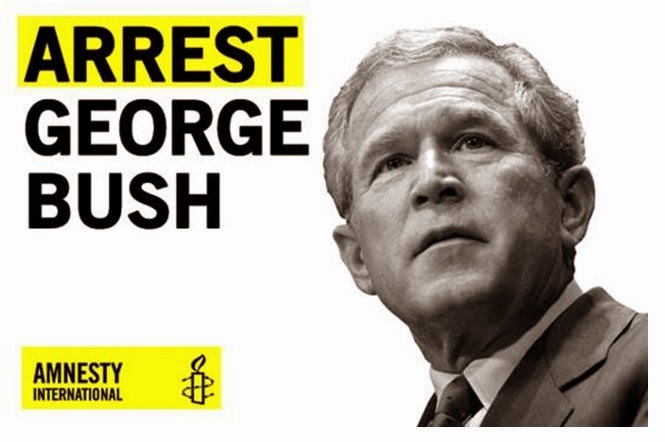
What’s more, if American national security, aiding and abetting the enemy, or responsibility for lives gratuitously lost were really of concern in Snowden’s case, (now former) President George Bush would have been tried and convicted long ago for invading Iraq, which contributed to hatred of the United States across the globe, and gave al Qaeda its greatest recruiting tool and boost. President Barack Obama likewise would find himself in the dock for his global drone campaign that has murdered hundreds of innocent women and children and created untold mortal enemies in the process. These presidents have killed and murdered with impunity and have real blood on their hands, making the United States less safe in the process.

What really matters to the Obama Administration and other governments is Snowden’s audacity—that he would take it upon himself, as a citizen, to force a conversation on not just transparency but also on democracy itself, a conversation that people like Obama say they favor but do nearly everything possible to avoid, postpone, subvert, or derail. Democracies do not value citizens such as Snowden; they fear, police, intimidate, and do whatever it takes to control, contain, domesticate, and discourage them. (Julian Assange remains the target of secret grand jury proceedings in Virginia.) Rather, citizens in democracies must know their place in the political order of things and stick to it. This is why Vladimir Putin initially insisted that Snowden curtail activities “against” the United States before considering asylum. Putin did not want Russians to view Snowden as a model. Think of this as the infantilization of citizenship. It could be seen in the streets of New York City during the 2004 Republican National Convention; it could be seen in the brutal police reaction nationwide to Occupy Wall Street in 2011 and 2012.


Yet few things are as democratic as the people themselves not just defending but taking and exercising their rights as citizens. This may, on occasion, entail problematic consequences. In the United States, at the founding, Americans vandalized the homes of royal tax collectors to defeat enforcement of revenue policies. In the 19th century, a group of Boston citizens refused to let Anthony Burns be forcibly returned to slavery by a United States Marshal, who was killed in the process. Frederick Douglass defended the killing of the marshal, a kidnapper, in the name of self-defense and the right to life. These actions are not automatically condemned because they involve violence and blood. They are considered part and parcel of America’s patriotic tradition. They involve citizens, aware of the potential consequences, taking actions on behalf of a new democratic order yet to come. You can hear the infantilization at work when it is asked, rhetorically of course: Who is Edward Snowden to take such action on his own? The answer is: who does he have to be? He’s a democratic citizen.
Share:
Continue Reading →